A Sustainable Pescatarian Diet
Here is a guest article about the benefits of a pescatarian diet. It seems that a vegetarian diet which does include fish can be a healthy and sustainable option.
Here is one man's experience of living meat-free but continuing to enjoy some fish.
Article thanks to Denis Faye of beachbody.com
Advertorial content
Please note some readers may consider this article as advertorial.
No money was paid for the article but the interests of the writer may be served by some aspects of the article, for example, by outgoing links.
The Sustainable Pescatarian
5 Tips for Eco-Friendly Fish Consumption
Admittedly the word sounds silly. Although I've embraced limiting my meat intake to seafood for well over a decade, I still feel a bit silly when its mention is met with furled brows or a baffled "You're a what-atarian?"
Sometimes, I skip it entirely and use another term coined by long-time "pescatarian" Steve Martin. He calls us "fishatarians."
But regardless of the word you use, it's a great way to eat. You get all the protein, omega fatty acids, iron, calcium, vitamin B12, and vitamin D that can be more of a challenge to find in a vegetarian or vegan diet. At the same time, you lessen your saturated fat intake and take a more ethical stance on nutrition.
The Buddhists believe that every life is sacred, but I operate on the principle that if I couldn't kill it, I shouldn't eat it. I've killed a few fish in my day, but if you gave me a gun and told me to point it at a cow, well, let's just say Bessie would live to see another day.
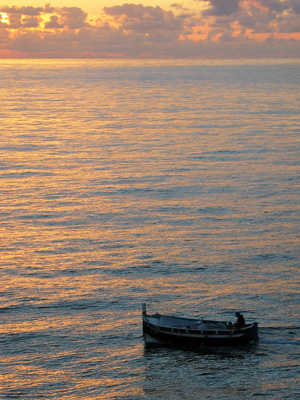
Picture: A small fishing boat at sunset
There's also the environmental consideration. It can be argued that fishing doesn't impact the environment the same way that the cattle, pork, and poultry industry promote land degradation, climate change, and air and water pollution. At the same time, overfishing is a serious issue for a number of reasons, the primary one being that, well, we're running out of fish.
Fortunately, there are ways to embrace the pescatarian lifestyle without depleting the oceans' fish stocks. Here are a few of them.
A pescatarian lifestyle: Less is more
Humans spent millennia eating only moderate amounts of meat. According to noted food writer Michael Pollan, it was only after World War II that the idea of three daily meat meals came into vogue. Someone realized that cows would eat America's massive corn surplus. This cheap feed source drove down the price of beef and, voila, all hamburgers, all the time.
Many pescatarians bring this ideology with them when they switch to fish. Just because it's affordable to crack open a can of tuna every day doesn't mean you need to eat that much. In fact, it's not a great idea. Most fish and shellfish contains at least trace amounts of mercury, so it's best to limit fish intake to two or three times a week. The rest of the time, a balanced diet including dairy, eggs, soy, legumes (beans and nuts), grains, and leaf greens will give you all the protein, vitamins, and minerals you need.
Educate yourself
Farmed or wild? Trawling or longline? Salt water or fresh?
Fishing is more complex than Tom Sawyer with a pole in the banks of the Mississippi.
As with all things, the more you know, the better choices you can make. If you're looking for a riveting, entertaining primer on the history of fishing, check out Cod by Mark Kurlansky. Although the book focuses on one species (I'll let you guess which one), it's a fascinating, well-written history of the relationship between humans and our little, scaly friends.
If you're looking for a more nuts-and-bolt reference guide, have a look at the Monterey Bay Aquarium's Seafood Watch website. It'll tell you everything you need to know about fishing, which fish and seafood are good and bad, and how to prepare them.
Be selective of your fish
There are scores of different kinds of fish and almost as many ways to yank them out of the sea. Find the right combination, and your Friday "pescatarian" fish dinner will be green as can be. For example, nearly all wild-caught Alaskan salmon is sustainably fished (and delicious). However, Atlantic salmon, no matter where it's from, is over-fished and should be avoided.
Same holds true for wild-caught versus farmed fish. For the most part, farmed fish is awful. Did you know that while wild salmon gets its pink flesh from the crustaceans it eats, farmed salmon has such an unnatural diet that they need to feed it food coloring to turn it pink?
Conversely US-farmed tilapia is an excellent choice. The farms are in closed, inland systems that prevent pollution and escapes - and there's no need for food coloring.
Be selective of your stores
Several western countries have laws mandating that most food products carry country of origin labeling. In the US, this law was extended to include fish in 2005, so if your local seafood market is behind the times, perhaps a gentle reminder is in order.
Many upscale markets will also include information as to whether the fish was wild or farm-raised and, if it was wild, how it was caught. Yes, seafood purchased at Whole Foods can be a little pricier, but isn't it worth a dollar or two to know what, exactly you're eating?
Be prepared
I've written several articles on the subject of fishing, but if you put me at a fish market in front of all those squids and smelt, tuna and tilapia, clams and crayfish, there's no way I'll be able to comprehensively point out all the good, bad, and ugly at hand. Even if I could, the fishing landscape (so to speak) is constantly shifting. All it takes is one natural disaster or piece of legislation to turn today's wild Alaskan salmon into tomorrow's Chilean seabass. (Stay away! Severely overfished!)
Once again, the Monterey Bay Aquarium comes to the rescue. If you have an iPhone, their Seafood Watch app gives you instant access to what to eat and where to buy it. If you're old school, they also have a free pocket guide you can print out on their website.
As omnivores, our bodies were designed to eat what we could get, when we could get it. Whenever you make an ethical choice to narrow that culinary field, it requires a little work to do it right. Sure, the world of sustainable seafood is a complex one, but if you navigate the waters correctly, you - and the environment - will reap big rewards.
About the author
Dennis Faye, the author of this article, used to be a good 50lbs over his ideal weight.
The weight fell off during a five year jaunt through Australia. During that time he discovered the extreme sports and fitness methods that still inspire him today.
He's been a professional journalist for 17 years, writing on sports and fitness for Outside, the New York Times, the Los Angeles Times, Los Angeles Magazine, Wired, Men's Health, Men's Journal, GQ, Salon.com, Surfer, and Pacific Longboarder, specializing in fitness, nutrition and weight loss articles.
His sports include swimming, scuba, rock climbing, spelunking (caving to those of us on the other side of the pond), mountain biking, trekking, and—most important—surfing. Denis is a writer on staff for Beachbody, which provides effective and popular home fitness programs.
*
Heavy metal dangers in fish
Denis clearly enjoys a fit and healthy lifestyle, thanks no doubt in large part to his pescatarian diet.
It is interesting that the Japanese diet, which is often recommended for some of the diseases of modern civilisation, including arthritis and cancer, usually contains a fair amount of fish and very little meat.
Even if you don't want to become a true "pescatarian", it's well worth reducing your meat intake and eating relatively more fish.
Be aware that some fish stocks may be contaminated with heavy metals and other pollutants. See The Nutritional Benefits of Fish for more on fishing and healthy, sustainable choices of fish.
There is also now evidence that some fish stocks - including wild-caught fish - are polluted by plastic microbeads, a very disturbing prospect. This is an environmental story to watch as it could have huge repercussions on human health. The health of the oceans is also affected, of course. Yet another example of the drive for company profits trampling on the natural world! Please remember to check the ingredients of cosmetics and personal care products and avoid anything that might contain these wretched things.
*****
From A Pescatarian Diet back to Living a healthy Lifestyle
Greenfootsteps Home - for more easy green living ideas
Article on A Sustainable Pescatarian Diet,
Copyright Denis Faye, 2011
Please do not copy without permission.
| Tweet |
 Subscribe to the blog


| Tweet |

Other pages related to the pescatarian diet which may interest you:
The Nutritional Benefits of Fish
Vegetarian Benefits for Your State of Mind
Organic Meat for a Greener Diet
Sponsored links
Footprints
- an occasional e-zine from Greenfootsteps
If you would like to receive the e-zine, please just sign up below.

New! Comments
Have your say about what you just read! Leave me a comment in the box below.