Healthier Diet Advice for Fitness and Energy - Greener Too!
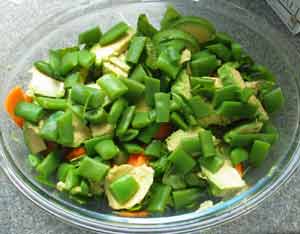
Here's some healthier diet advice for living in the modern world!
The elements of a healthy diet are quite simple and even old fashioned. Much the same as they always were, in fact.
A healthy diet will also save on stress and even save you money in the long run.
Maintaining a great diet can also be a small but significant contribution to a green, earth-friendly lifestyle.
Click here to go straight to the recommendationsSo how can a healthy diet be part of a greener lifestyle?
Briefly, a healthy diet tends to keep us fit and well so that we tend to need less treatment and support for our health. That, in turn saves resources and care for those who really need it.
Hospitals and clinics are energy-hungry places. If people understand and practise the elements of maintaining good health, less fuel is consumed and fewer carbon emissions are created.
A healthy diet also supports more local and organic food suppliers which helps the local economy and saves on expensive imports.
Faulty diets, health and disease
A good diet is one of the fundamentals of good health. This is something which is becoming harder to achieve for many people in our time-pressured society.
In modern Britain, for example, adult-onset diabetes is at an all-time high. This is a disease which is largely caused by faulty diet and lifestyle. It leads to immense pressure on the National Health Service, attendant health problems and misery for sufferers and even lives cut short.
This is the kind of health crisis which our junk food/fast food culture can lead to. Many people are consuming far too much food laden with low-grade fats and sugars but little else by way of nutrients. Without a healthy amount of exercise, this kind of diet, over time, will lead to health problems such as diabetes, heart disease, obesity, cancers and psychological disorders.
A healthy diet involves eating plenty of good quality organic and conservation grade foods produced by sustainable methods.
This is good for other species, too. Organic farming supports bio-diversity far better than conventional farming on the whole. For more on organic food see here.
Food miles and packaging
A healthy diet can also be quite low in terms of food miles and low in terms of energy usage.
You can usually buy suitable foods, adapted to your climate, close to where you live, so that your diet is not contributing significantly to global warming and climate change.
Other foods you may choose to eat can be imported using relatively sustainable methods. A good diet which is also quite green does not have to be an exercise in self-denial. Many food producers are becoming organic and are keeping their carbon footprints fairly low by considering the best ways to export food efficiently.
Many organic food providers are also aware of the need for more bio-degradable packaging and less packaging over all. This also helps keep the carbon-footprint of some organic foods low.
I hope I have convinced you (if you needed convincing!) that a healthy diet is part of a green lifestyle!
Sponsored links
Here are the recommendations.
See below for a simple outline of a healthy, no-fads approach to diet - one which will make you feel great, keep you slim (or help you get slim) and is consistent with green living ideals.
Here are some ways to make your diet healthier, and greener
Healthier diet advice:
- Eat when you are hungry and don't when you are not. Drink when you are thirsty and don't when you are not. Many health professionals believe this is one of the most important keys to a long and healthy life!
- If you are healthy and fit, run yourself on empty for a little while sometimes. We are well adapted to a little hunger and you will usually find that your energy improves if you sometimes go hungry for a short while. I'm talking about an hour or two here and there rather than anything longer. If in doubt, always consult your physician first.
- Eat a balanced diet. This means in practice about 20-25% fat or 30% at the most, 10-20% protein and the rest good quality carbohydrates and fibre. The amount of protein you need is influenced by your lifestyle; if you spend your days pumping your muscles your needs will be more than most other folk.
- Eat lots of fresh, raw and lightly cooked foods. Some foods are easier to digest when cooked. Most foods have more vitamins and enzymes available when raw or lightly cooked. So eat a variety of foods, cooked and raw, and enjoy them both ways but don't overcook things.
- Eat fresh fruit and vegetables at practically every meal - at least five portions a day. They provide valuable vitamins, minerals and enzymes which you just don't find in anything like the quantity and variety in processed foods.
Read on for more on specific types of foods and for things to avoid.
Healthier diet advice: fish and seafoods
Eat fish once or twice a week at most.
The benefits of fish are well known. Oily fish is particularly good. Omega 3 oils in fish such as mackerel have a role in preventing heart disease and help keep our joints supple.
However, with the contamination of the seas which is an on-going problem, it is now best not to eat fish more often than once or twice a week. This is because some toxic elements such as mercury store themselves in the bodies of fish.
There is also the issue of declining fish stocks. We are still over-fishing the oceans, despite the quota systems that have been introduced. So, from a green standpoint, it is best not to eat too much fish and to choose carefully the fish you do eat..
See The nutritional benefits of fish and The benefits of a fish oil supplement for more on over-fishing, toxic fish and the safety of fish oil. See FishonLine for sustainable fish choices.
Seafoods such as prawns and scallops are great source of nutrition but some people are allergic to them. Pure waters are essential for safe production of many types of seafood. You could almost say that eating seafood helps keep coastal waters clean, therefore. There are huge pressures on the water quality around our coasts.
Seafoods from the far east are rarely produced sustainably and are best avoided if you want to eat in a green and sustainable way.
Healthier diet advice: meat
If you eat meat make sure that most of it is fresh organic meat raised according to the principles of good husbandry. Your health will benefit from meat which has been organically reared and you should be assured that the conditions for the animals are more humane and more sustainable.
If you can find wild meat for sale it is generally leaner and greener - provided that it's not from an endangered species of course!
A small quantity of well-produced meat is far preferable both for your health and from a green living standpoint. As quality meat tends to be expensive you can save money by just eating less of it. Peasant diets around the world use vegetables and legumes rather than meat. This is a healthier and more sustainable approach.
Healthier diet advice: dairy foods
While many dairy foods can be nutritious and part of a sustainable and natural diet, the fact is that many people experience problems with them. Allergies and intolerances are common, particularly with milk and cheese.
I know for myself that my health tends to be better when I keep dairy foods as a small proportion of my diet.
Organic milk is more widely available now and natural yogurts are more readily tolerated than unfermented foods by many people.
Healthier diet advice:
The role of fats in your diet
Fats are absolutely essential for health. For this reason, really low fat diets are not a good idea.
The question is: which fats and in what amounts?
To remain healthy we need between about 20% to 30% of our diet to be fat. The amount you need depends upon your lifestyle and living conditions.
Very low fat diets are harmful because the body cannot metabolise all the vitamins needed for health. Eating too many animal and hard fats (including the fats in margarine) causes atherosclerosis - hardening and narrowing of the arteries.
Many processed foods are chock full of hydrogenated fats. These are liquid vegetable oils which have been processed to make them behave like hard fats. The process of hydrogenation makes them contain trans-fatty acids which are a hazard to health.
Instead, most of the fats in your diet should be liquid at room temperature. Most vegetable oils contain good supplies of the essential fatty acids which are needed by your body.
Many vegetable oils are good and can be used for cooking or in salad dressings. Use cold-pressed organic oils for the richest, most nutritious oils available. Safflower oil and peanut oil are particularly rich in nutrients. Good quality rape seed oil is also very good and can be used for frying.
Fats from oily fish are also particularly beneficial, being full of Omega 3 EFAs which have been shown to help reduce the risk of heart disease.
Healthier diet advice:
What to drink for a greener healthier diet
- Make water your first drink of choice. Use a filter on your water supply so that you are not being exposed to nitrates and chlorine in your drinking water.
- Enjoy good quality organic wines and beers in moderation.
- Good quality fruit juices are valuable in moderation. Be aware that many commercial juices have added sugar and use chemical extraction processes.
Healthier diet advice: what to avoid for the most part
Here are some of the commoner foods that it is better to avoid in the main if you want to preserve your good health.
Avoid added sugar and processed foods for the most part. Sugar will give you energy in the very short term but it quickly leads to an energy deficit as your body takes it out of your blood stream for storage. Ever noticed how tired you feel half an hour after that chocolate bar?
Sugar also robs your body of nutrients as it is processed. Many processed foods have a similar effect. For good levels of sustained energy you need complex carbohydrates such are found in wholegrain bread and oats.
Barbecued foods are full of free-radicals - chemicals which can cause many health problems, so don't have them too frequently. Gas barbecues are more environmentally-friendly and the resulting meals are less damaging but they don't taste quite the same.
If you like the taste of barbecued food then sustainable locally-sourced charcoal is best to use. Or just use old seasoned wood for a natural fire. Be aware that you may still be exposing yourself to toxic products of combustion, so it is best not to eat this way very often.
Healthier diet advice:
Avoid eating rubbish!
It goes without saying that it is best to avoid eating rubbish - at least for the most part.
Junk food and processed food is everywhere and hard to avoid when you are out in the urban jungle and short of time. But it's worth making sure that you avoid the heavily hydrogenated and sugared foods which clutter the shelves of the average supermarket and some takeaways. Some of these "foods" have even been shown to lead to food cravings. They are certainly not very satisfying and the nutrients they do contain are usually unbalanced.
Many contain undesirable ingredients such as MSG and aspartame. Some of these chemical ingredients have toxic effects - for others, the jury is still out.
It is certainly worth making good dietary choices and leaving the junk for special occasions (though it's hard to think of anything special about most junk food!) and for when you have completely run out of better options.
Healthier diet advice:
Losing weight effortlessly with a healthier diet
If you are overweight a diet will very often make you think about food even more! The dietary guidelines given here should make it easy for you to lose weight if you exercise plenty and don't let yourself be bored.
If you want a specific diet, then try the Hay System, or have a look at the GI diet. Both these approaches are similar and rely upon a core of excellent nutrition. (There are concerns, however, that the GI diet leads people to adopt a diet which is too low in carbohydrates; while some carbohydrates are unsuitable, we still need to eat plenty of carbohydrate - it should be our main source of energy.) You can eat as much as you like on these diets.
When you are not eating meals make sure that you are busy and active with things which interest you.
One of the main reasons to avoid diets as such is that most people will relapse - and end up putting weight back on. This is why a real healthy living diet is important. Most people who have a rational diet and lifestyle will not need to adhere to a specific diet but rather just embrace the principles of a healthy living diet - and then eat what they like within that broad framework.
Healthier diet advice:
Take a good supplement
One other piece of healthier diet advice: try using a good food supplement. There are lots of good reasons why this is excellent advice, some of them quite surprising! This may well be unnecessary if your diet is full of fresh, excellent quality foods in a good balance.
See this page for more on this issue.
Some books for a healthier diet
Here are some useful books on helping yourself to a healthy diet.
This is a great and highly popular book which contains the principles of healthy eating and debunks plenty of dieting myths. There are loads of excellent recipes and information on getting high quality nutrition from your food.
Eat, Drink, and Be Healthy: The Harvard Medical School Guide to Healthy Eating
Science to the rescue. Here are the elements of healthy eating outlined in some detail with a look at lifestyle and exercise, too. There's useful information on how to avoid degenerative diseases and the links between certain types of diet and diseases. The book comes down in favour of wholefoods and fruit, of course, but does not really address the issues of chemical foods and factory farming or other green issues which inform the Greenfootsteps approach to healthier diet advice.
Dr Willett gives an alternative to the USDA "pyramid" of foods, based on up to date research. For example, in his healthier diet advice, he makes a big distinction between saturated fats and Omega 3 essential fatty acids and between processed carbs and wholegrains (many in people in health foods have made this distinction for years, of course). There's also lots of interesting info on rarer carbohydrates sources such as quinoa and spelt flour.
This book will help you build a rational, no-fuss, healthy living diet for yourself and your family.
Please also explore the Green Kitchen and Green Recipebook sections of Greenfootsteps.com for more ideas and pointers towards healthier diet advice.
*****
Green Health - Living a Healthy Lifestyle
Greenfootsteps Home - easy green living
Healthier Diet Advice,
Copyright Greenfootstpes.com 2014
Please do not copy except for personal use.
| Tweet |
 Subscribe to the blog


| Tweet |

On other pages
The Benefits of Walking for Fitness
Sponsored links
Footprints
- an occasional e-zine from Greenfootsteps
If you would like to receive the e-zine, please just sign up below.

New! Comments
Have your say about what you just read! Leave me a comment in the box below.