Healthy Hair Shampoo Can be Found
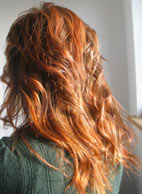
Healthy hair shampoo is a must!
Every one wants healthy hair and a healthy hair shampoo is undoubtedly one part of the jigsaw.
Healthy and natural hair shampoo can be found. This article looks at the issues.
How to have healthy hair?
There are many products on the market claiming to give our hair a healthy look, claiming to balance the acid/alkaline properties of our scalps and generally promising the earth!
Some of them practically cost the earth too. Some ads even imply their product will make our hair healthy.
So what's the truth? What do we need for healthy hair and how can we find a healthy hair shampoo? What are natural hair care products and how do we find them? Is organic hair care worth pursuing? How safe is the average hair treatment product?
Baloney?
There is a fair amount of baloney in many of the claims made by hair shampoo companies.
Many independent studies have shown, time and again that the more expensive products are not necessarily better for us than many of the cheaper ones. (Nor do they necessarily perform better: in blind testing, relatively cheap drug store shampoos like Clairol Herbal Essences are shown to clean just as well as many expensive salon brands.)
(Note: Clairol still uses animal testing for some cosmetics, I believe, though they have stopped using it on Herbal Essences - info from PETA)
Health concerns - and the environment
Some of the ingredients used in many products, both expensive and cheap, are suspect from a health viewpoint.
Not only are many these products not particularly good for us, the chemicals involved may even be damaging to the environment. Certainly, a lot of the packaging used for many of these products is contributing to landfill sites!
Manufacturing processes often place stresses on the local and wider environments too - and every large factory is undoubtedly contributing to greenhouse gases to some extent.
So lets have a look at some of the ingredients and assess what they can do for us and what they may do to the environment.
Healthy Hair Shampoo:
What is shampoo?
Clearly we all want to be able to wash our hair safely and effectively. The point of shampoo is to remove dirt such as dead skin, and sebum - naturally occurring oils - and also the build up of residues from other hair products.
If you live in an urban environment you may also need to wash out some of the accumulated dirt and pollution of the average city environment, so washing your hair regularly is a must.
Here are the main ingredients found in shampoos
Cleansing agents and surfactants
Let's take a look at what the average shampoo offers.
Sodium laureth sulphate (SLES) and/or sodium lauryl sulphate (SLS) or ammonium lauryl sulphate and ammonium laureth sulfate. These are the cleansing agents and can often be found in lots of other cleaning products.
They are classed as surfactants. Their job is to dissolve and loosen dirt into a suspension which can then be rinsed away. They are also responsible for the lather which most shampoos create when you put them on your hair and rub them in.
Acids such as Ascorbic acid (vitamin C) and citric acid are used to leave hair looking bright and glossy. Other additives affect the appearance of the shampoo itself - for example glycol distearate gives a pearly look to shampoo.
There are also a whole raft of additives which are included to make the shampoo have different specialised properties. For example, fragrances, conditioning agents, volumisers and sun screening chemicals (see below).
Preservatives
Most shampoos also contain preservatives to prevent deterioration of the product.
Which shampoo ingredients may give cause for concern?
There has been a lot of concern recently that sodium lauryl sulphate and sodium laureth sulphate (SLS) may not be safe. There have even been rumours that they can cause cancer.
The truth is that they do cause irritation in some people. But nothing further than that has been proved. Millions of people use these chemicals every day as they are such major constituents of many cleaning products.
Skin thinning
There are certainly concerns that these two common chemicals may be responsible for thinning the skin, making it more permeable to hazardous chemicals. For this reason it is wise to wash your hair no more than necessary for good hygiene.
If you have been using products containing these ingredients without problems then there is, perhaps, no reason to change. For people who do experience some irritation after using them there are now alternatives.
You can buy SLS free products from Amazon who carry a reasonably wide selection. Also, your local health store should be able to advise you.
Parabens
There are also concerns over parabens, a group of esters. This class of chemicals are thought to be endocrine disrupters. They commonly are used in shampoos and many other products as preservatives. This is a serious concern because endocrine disruptors can interfere with growth, development and reproduction. After all, the scalp, like any skin, absorbs some of the chemicals applied to it.
To see books about shampoo ingredients click here: hair shampoo ingredients There are also recipes for healthy hair shampoo that you can make at home.
Healthy Hair Shampoo:
Do we need shampoo?
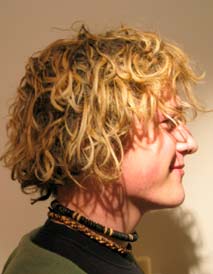
No shampoo? Some people believe that it is possible to go without washing your hair at all and that, left to its own devices, hair will regulate itself after about 6 weeks.
This may be true, but most people are not willing to spend that long finding out! And this would only be a solution for people living in a relatively clean and unpolluted environment.
Unfortunately, most people these days can't claim to be enjoying that.
Most people will prefer to obtain a wholesome organic shampoo to keep their hair clean and their conscience in good shape too! Many such products are exceptionally good - but always read the label to know what you are getting.
There are other kinds of natural hair treatment that may substitute for washing with shampoo. Bicarbonate of soda is used as a harmless degreaser by some people, for example. I've not tried it so far.
Here is a brief outline of some of the main different types of shampoo and their ingredients and characteristics.
Healthy Hair Shampoo:
Different kinds of shampoo
Baby Shampoo
Baby shampoos are formulated to be mild and non-irritating to eyes. The acidity is matched to the eye's acidity, so that it has no irritating effects. Most shampoo is slightly acid as that delivers shiny, clean-looking hair. Common soap is alkaline, which is why it makes hair look dull when it is used instead of shampoo.
Healthy Hair Shampoo:
Thickening shampoos
Thickening or "volumising" shampoos deposit a film on the hair to make it appear to have more "body". Unless these film-forming agents are removed from time to time, they build up and cause hair to look flat and feel heavy. Allantoin, dimethicone, glycerin and hydrolyzed collagen are commonly used, as is guar hydroxypropyltrimonium chloride.
Healthy Hair Shampoo:
Dandruff Shampoos
These shampoos often contain zinc pyrithione, which combats the fungal organisms that cause dandruff. Others, such as Herbal Essences contain salicylic acid to exfoliate the scalp.
Stronger formulations for those with more severe dandruff problems may contain coal tar which slows the creation of skin cells on the scalp. It may be especially effective in combating scalp psoriasis and seborrhoeic dermatitis but these shampoos can be can be very drying to the hair and quite irritating to some people. Experts warn that coal tar shampoos should be used only as often as is necessary to control symptoms.
Some dandruff shampoos may still contain selenium sulphide. While a small amount of selenium in your diet is a good thing, this particular selenium salt is believed to be a carcinogen.
If you want to try organics tea tree shampoo, which may help dandruff, this one from Amazon may be beneficial.
Healthy Hair Shampoo:
Color-enhancing Shampoos and Sun Protecting Shampoos
No colour enhancing shampoos have actually been shown to extend the life of hair dyes.
The same holds true for brands that claim to protect hair from the sun.
Ingredients such as sunscreen and anti-oxidants are washed down the drain after rinsing, leaving no benefit for your hair.
The shampoos really do contain UV protectors but the amount involved, especially after rinsing, is unlikely to give any real protection.
Natural Henna Hair Dye
Safe, 100% natural henna hair dye that is chemical free.
Healthy Hair Shampoo:
Nourishing/Repairing and Restructuring Shampoos
Hair is dead and therefore it can't be repaired. Shampoo products can only help the look and feel of hair temporarily.
So,in most cases, beyond the cleaning and some coating properties of shampoos, most other chemicals are fairly useless. There may be some benefit for people with dandruff and other scalp conditions in using specialist shampoos (though if you suffer from dandruff regularly you should also look at your diet).
Although hair is dead, your general health is reflected in the quality of your hair to some extent, so it makes good sense to have an excellent diet.
Here's some info on good, non-faddy diet basics:
Healthier Diet Advice Other than that it's pretty much about what you like: how it smells, how it leaves your hair feeling and how manageable it becomes from using it.
Beyond that, it's a chemical sales pitch!
Healthy hair shampoo and natural hair treatment:
Best advice for healthy hair shampoo?
Best advice? Here are some ways to ensure that your shampoo or natural hair treatment product really is healthy; healthy hair shampoo for us and the environment
- Buy simple shampoos without too many extras. Natural hair shampoo is widely available from green companies.
- Check the ingredients list for parabens and avoid them if possible.
- Use organic hair products and natural hair treatments from your local health shop, or from on-line stores. They will usually be better for you and the environment. There are many natural hair care products available on the market and some are very good indeed. Natural shampoo contains very few "chemical" ingredients (the ones with the really long names! - everything is made of chemicals, after all). The ones which are used are generally considered very safe. Companies such as Faith in Nature, Nature's Gate and Green People do a great job bringing the benefits of natural body care products to more and more people. Most of these companies can claim to be making healthy hair shampoo - for us and the environment. But there are ways to check up on them! (See below)
- Don't shampoo more often than you really need to feel clean and keep your hair manageable. For most people once or twice a week is enough (teens excepted, of course!)
- Dispose of the packaging correctly, recycling where possible.
- Change your shampoo fairly often as your scalp adapts to each formulation, meaning that the product works less well over time. (This may be anecdotal evidence only but seems to hold true!)
There is also a simple natural hair treatment you can very easily do yourself: see An olive oil hair treatment for healthy looking hair for more details.
How to check your hair shampoo for safety
There are hundreds of possible ingredients in hair shampoos.
If you want to check the ingredients and safety data for any particular shampoo or natural hair treatment, take a look at the Environmental Working Group's site: Skindeep. You will find an extensive database on all the commoner brands of shampoo - and other cosmetics.
If you are a fan of commercial products, it is well worth checking out their health credentials at Skindeep. The EWG does great work in exposing the chemicals that we expose ourselves to when we use healthy-sounding personal care products.
*****
Sponsored links
Healthy Hair Shampoo Can be Found - TOP
| Tweet |
 Subscribe to the blog


| Tweet |

On other pages
The Nutritional Value of Fruit
Footprints
- an occasional e-zine from Greenfootsteps
If you would like to receive the e-zine, please just sign up below.

New! Comments
Have your say about what you just read! Leave me a comment in the box below.